
Resisting Environmental Harm & Reimagining Justice Down East
With heat records breaking across the state last week – amidst an already record-setting drought – we are all feeling the effects of climate change on our state. If you’re looking for more information on how to stay safe during heat waves, check out the NC Division of Public Health’s Extreme Heat resource page.
Our team has had a busy last few weeks! We launched the Durham Resiliency Organizing Hub, wrapped up a base-building training program for our first class of Resiliency Organizing Hub Fellows, and hosted the immersive Reimagine Sessions with our 2025-2026 TapRoot Residents. (And applications for our 2026-2027 TapRoot Arts Residency close this Thursday, June 18. More details below!)
As NCCJC's Director of Civic & Community Engagement, one of main roles in supporting our Resiliency Organizing Hub program. Earlier this spring, Hub leaders from across the state gathered in Goldsboro for our quarterly retreat. These retreats are some of my favorite moments throughout the year! They allow us to deepen relationships across Hubs, learn from one another’s work, strengthen our collective vision, and practice the mutual support that is essential to movement building.
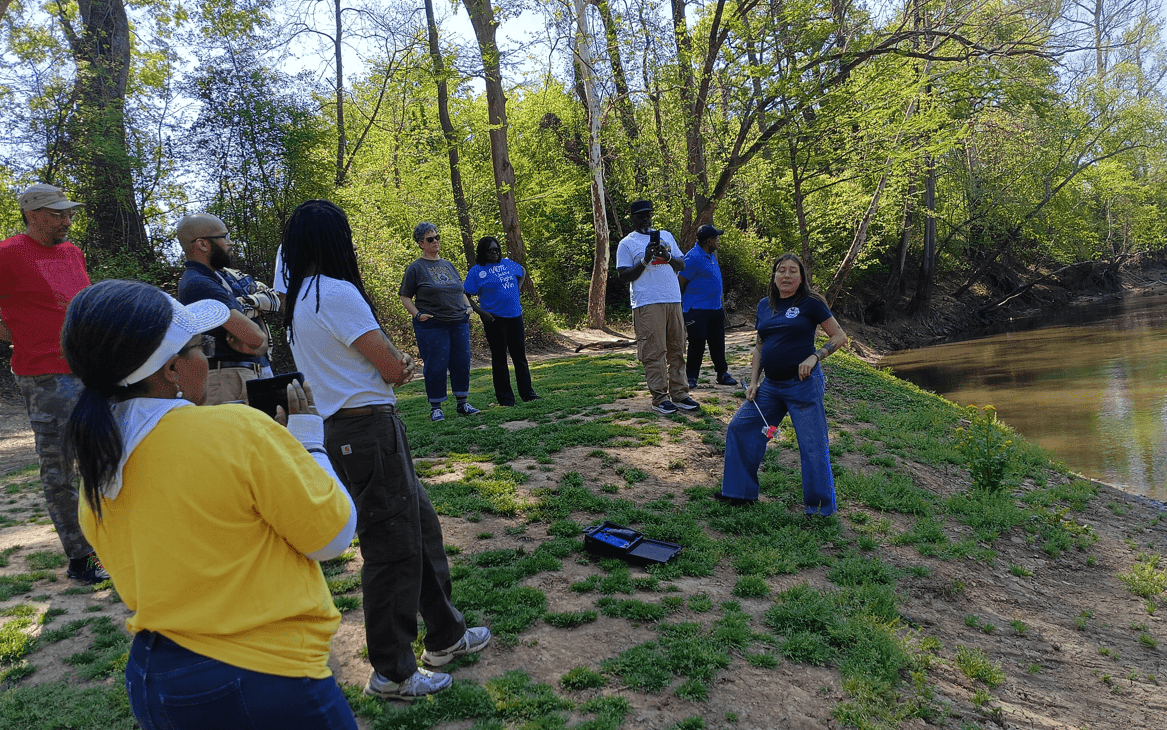
Neuse Riverkeeper, Samantha Krop, shared updates on water quality in the region with Resiliency Organizing Hub leaders from across the state at our recent gathering in Goldsboro. (Photo credit: Kristal Suggs)
Hub anchor group, Down East Coal Ash Environmental and Social Justice Coalition (Down East), hosted the retreat. We participated in storytelling exercises, energy justice site visits, horesback riding, healing practices, and strategic discussions about the future of our statewide organizing. NCCJC staff facilitated a workshop on the 4Rs of Social Transformation and movement mapping – helping us better understand how our work connects across issues, geographies, and generations.
One of the things that stood out most to me was how clearly Down East embodies our 4Rs framework.
Resisting Environmental Harm & Building Energy Justice
For more than a decade, Down East has been at the forefront of the fight to hold Duke Energy accountable for coal ash pollution and its impacts on communitiessurrounding the H.F. Lee Plant in Goldsboro. Bobby Jones, one of Down East’s co-founders, has helped shine a light on the environmental and health impacts of coal ash contamination while advocating for stronger cleanup efforts and community protections. Their advocacy helped build momentum for one of the largest coal ash cleanup efforts in the country and continues to push for energy systems that prioritize people over profit.
During our retreat, we learned more about the history of this work and visited locations connected to ongoing environmental justice struggles. We heard firsthand how residents have organized around issues affecting their water, land, and health while continuing to advocate for a cleaner and more just energy future.
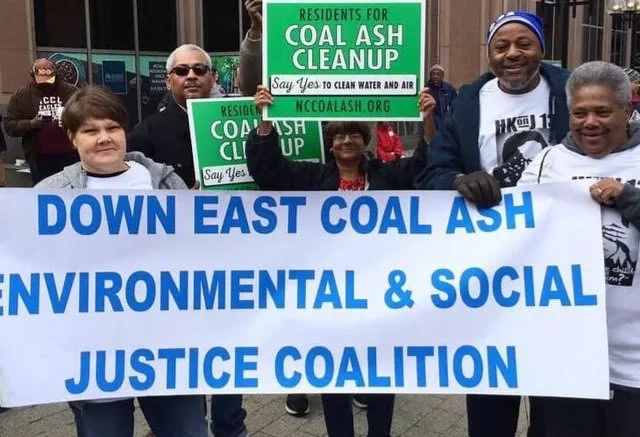
Down East, including Resiliency Organizing Hubs leaders Bobby Jones and Larsene Taylor (second to right and far right), has led statewide efforts to regulate and clean up coal ash for decades. (Photo Credit: Down East)
Our learning included a visit with the Neuse Riverkeeper, where we explored how pollutants move through watersheds and impact downstream communities.
Standing along the Neuse River, we observed water level markers from major flooding events such as Hurricane Florence and discussed the interconnected challenges of flooding, drought, water quality, and climate change. These conversations reinforced the importance of community-led stewardship and advocacy for our waterways.
Democracy as a Tool for Community Reform and Change
Another powerful aspect of Down East’s work is their commitment to civic engagement.
Like many of our Resiliency Organizing Hubs, Down East recognizes that meaningful change requires both community organizing and democratic participation. Their annual “Parties at the Polls,” voter education efforts, and door-to-door outreach help connect residents with the issues that directly affect their lives. They understand that voting is one tool communities can use to shape decisions about environmental protections, public investments, and community wellbeing.
Throughout the retreat, we reflected on the importance of building year-round civic engagement through a climate justice lens, and what that looks like for each of the Hubs. The strongest communities are those where residents understand how decisions are made, know how to advocate for themselves, and feel empowered to participate in shaping their future.

Goldsboro residents attend one of Down East's Power to the Polls events during the 2024 election. (Photo Credit: Down East)
Reimagining Healing, Safety, and Support for Young People
While Down East is widely recognized for its environmental justice work, their commitment to community care extends far beyond environmental issues.
They host an Anti-Violence Youth Ambassadors Program and other related initiatives where they create spaces for young people impacted by violence to find support, connection, and leadership opportunities. Their recent Guns Down Summer campaign brought together community members to promote peace, healing, and collective responsibility for creating safer neighborhoods.
As we gathered with Hub leaders from across the state, this work served as a reminder that resilience is about more than how we respond to the next (or ongoing) crises facing our communities. Resilience is also about relationships. It is about ensuring that young people feel seen, valued, and supported. It is about creating communities where people can not only survive, but thrive.
If you're interested in learning more about NCCJC's Resiliency Organizing Hub work and how you can get involved, I hope you'll reach out!
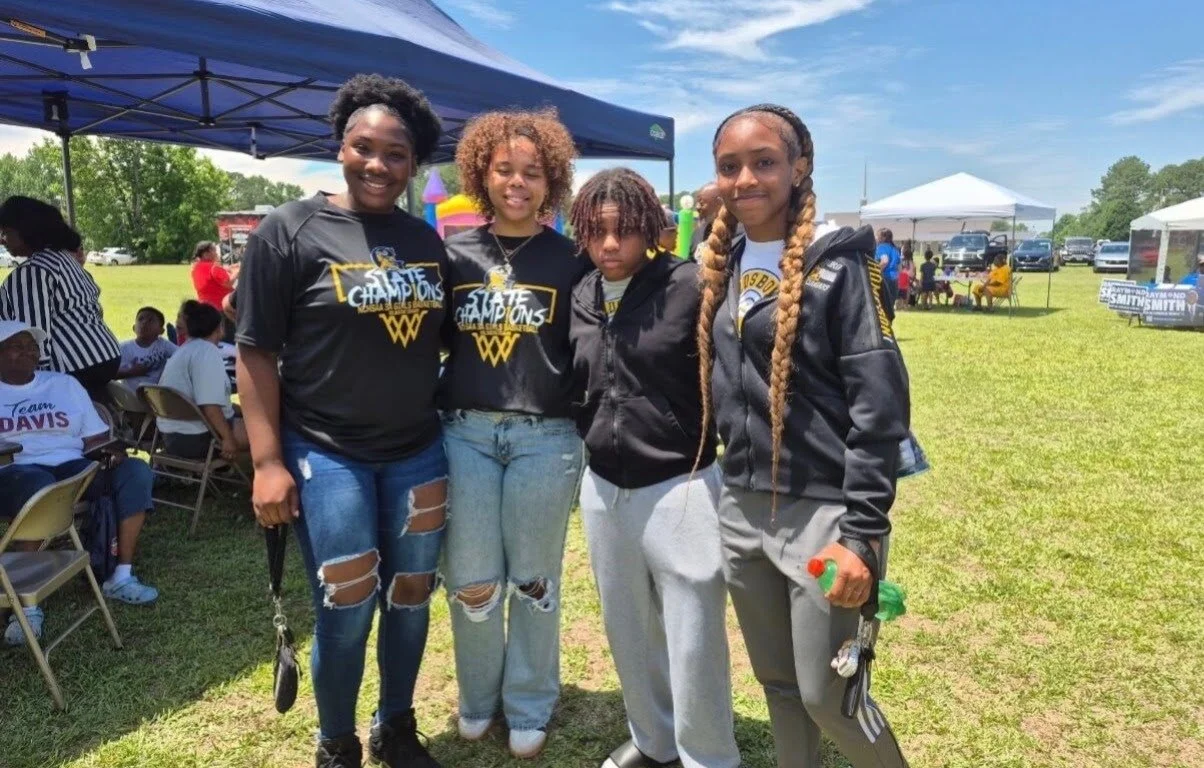
Down East youth leaders volunteered at a recent event promoting community safety. (Photo Credit: Down East)
