
From Independence to Interdependence
Love for the people and places where we live compels us to recognize the realities of our interdependence. We continue to grapple with the question, however, of whether our inherent connectedness will be a source of mutual flourishing or widespread suffering.
On July 5, 2020, our climate and environmental justice movements defeated two monopolies – Duke Energy and Dominion Energy – by stopping the construction of their 600 mile Atlantic Coast Pipeline. As with many dangerous fossil fuel schemes, indigenous nations were disproportionately impacted by the project and led the successful resistance against it. Environmental justice leader and NCCJC Board member, Lumbee Elder Donna Chavis, declared that we should always remember this historic win by celebrating July 5th as Interdependence Day.
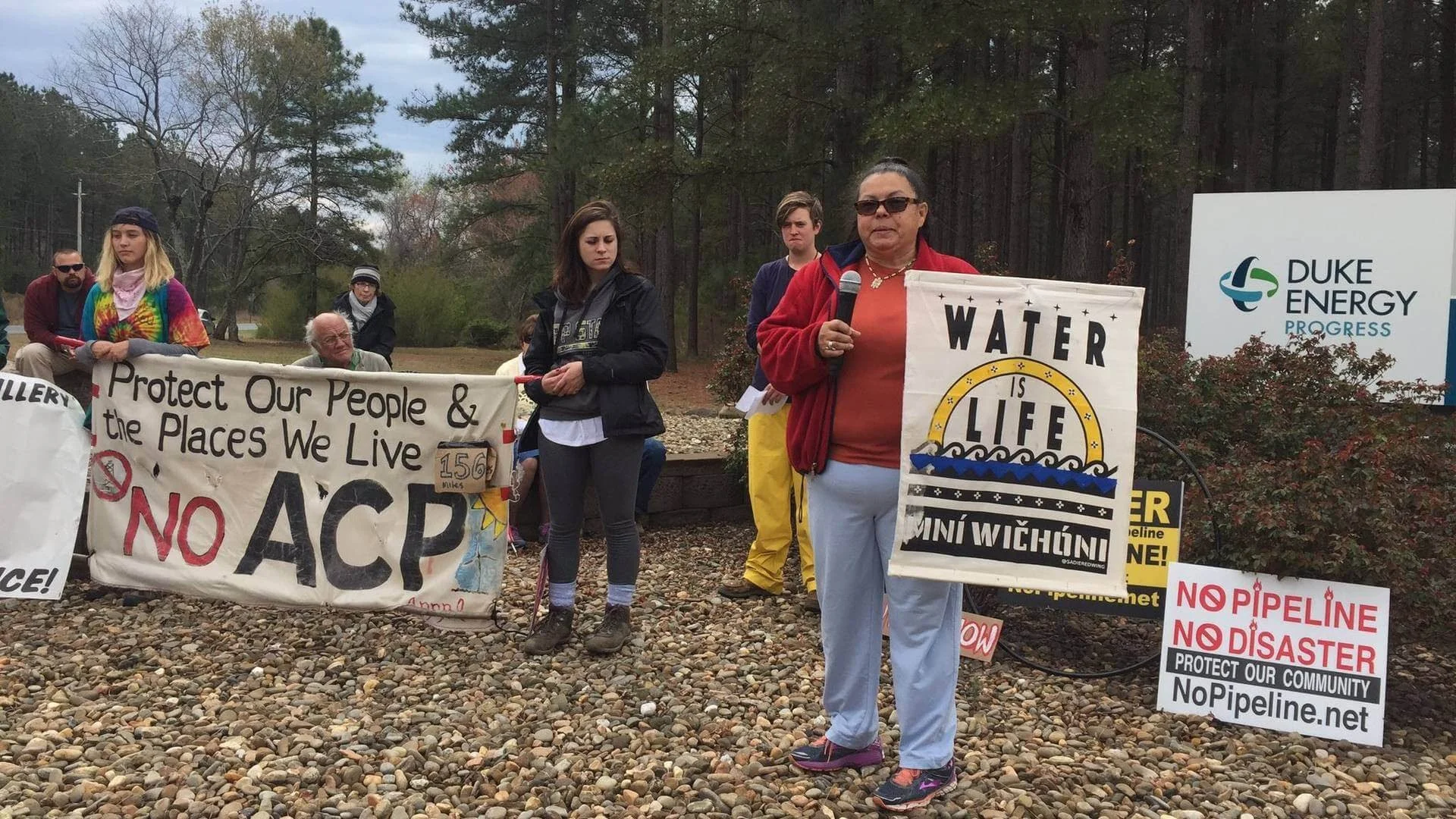
Lumbee Elder, Donna Chavis, speaks at an Atlantic Coast Pipeline protest outside Duke Energy's offices in Lumberton. (Photo credit: Democracy Now)
Since then, we’ve continued to heed Ms. Donna's call by highlighting how our communities truly thrive when we value cultural diversity, protect biodiversity, and repair the harm to our shared planetary home.
This past weekend, we joined diverse leaders from across Turtle Island (aka, the United States) in signing a new Declaration of Interdependence. It’s not too late to add your name here in support of this inclusive vision of our country.
The NCCJC team has also been exploring interdependence as a core principle for addressing climate change, social inequality and political extremism by reading the Global Justice Project's “plan for equality and prosperity within planetary boundaries,” created by over 200 researchers from around the world. We hope you'll check it out and share your thoughts with us!
Reflections on American 250 from Her Voice cohort members
Last Thursday, members of NCCJC's Her Voice Indigenous women cohort gathered at the Nasher Museum in Durham to experience the LISTEN exhibit by Dyani White Hawk, which features footage of women from eight different tribal nations speaking their indigenous languages, filmed in the natural settings of their homelands.
In response to this exhibit, Her Voice members discussed the themes of cultural preservation and shared their perspectives about the 4th of July through their own videos.
Windy Daniels Kennedy, member of the Waccamaw-Siouan, reflected:
"Today, many people are looking at American 250 as a moment to remember the birth of a nation. For Indigenous People, it is a time to reckon with everything that was lost, taken, but still survived. From our perspective, this anniversary is about reclaiming what was never truly gone: our stories, our land, our languages, our relationships, and our responsibility to the natural world.
It is about being able to reclaim and be proud of traditional ecological knowledge. Knowledge carried through generations, rooted in lived experiences and observation, relationships and care for the land. It's about telling our stories in places we may never have thought possible, and knowing that the stories belong there. In returning to the land, we find more than peace. We find memory and healing. We find the strength of those who came before us, and the responsibility to carry that strength forward. Reclaiming is not only about what was stolen. It's about remembering who we are, restoring what we can and making space for future generations to live in balance with the Earth again."
Premier of Seeding Sustenance
Join us on Saturday, July 18th for the premiere of Seeding Sustenance, our new multimedia show focused on food justice.
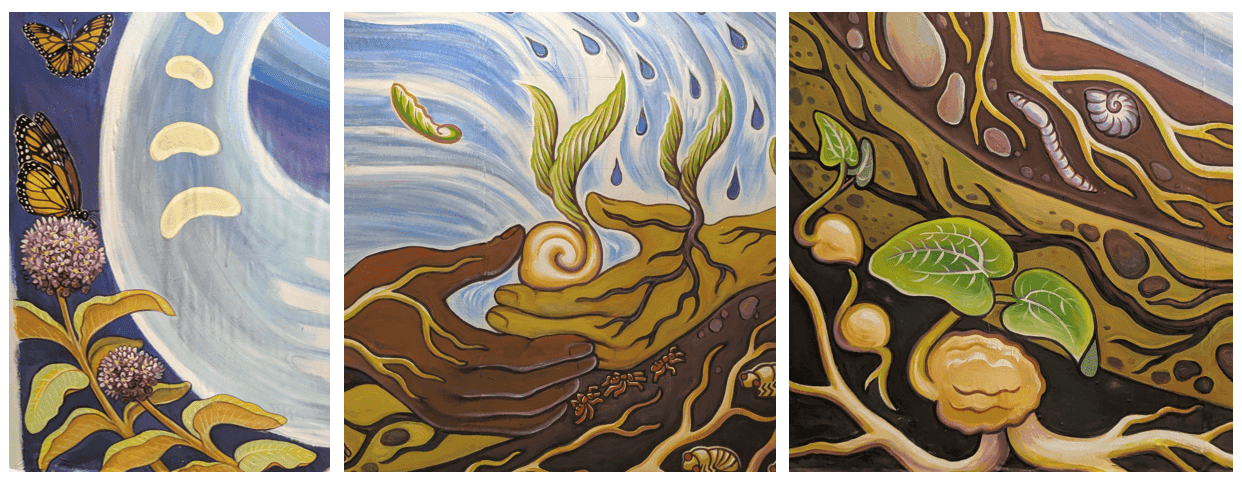
A collaboration of NC Climate Justice Collective (NCCJC), Paperhand Puppet Project and the Collective on Racial Equity in Food Systems (CORE), this performance explores the sacred connection between people and the natural world, while also naming the harm caused by industrial agriculture and the systems that separate our communities from land, seed, food, and ancestral knowledge.
Through spoken word, a cantastoria (portable mural), live music, and giant puppets, Seeding Sustenance invites us to remember our relationships with the Earth and nurture a future rooted in care, reciprocity, and belonging. This program is grounded in ongoing practice of bringing young people, artists, organizers, and community members together. Community storytelling and a Youth Speak Out will follow the performance.
The performance is also connected to the Rooted in Community (RIC) gathering taking place next week in Chapel Hill, hosted by our good friends at Transplanting Traditions. NCCJC will be leading a workshop, Food justice is Climate Justice, as part of the gathering! Please reach out if you are planning to attend.
A few logistical notes:
This event is free, but tickets are required. RSVP Here!
Please arrive at 6:00 PM. The performance begins promptly at 6:30PM!
In case of rain or extreme heat, our alternative indoor location will be the Fed Ex Global Center (123 S. Boundary St., Chapel Hill)
