
Our Approach: The Four Rs of Social Transformation
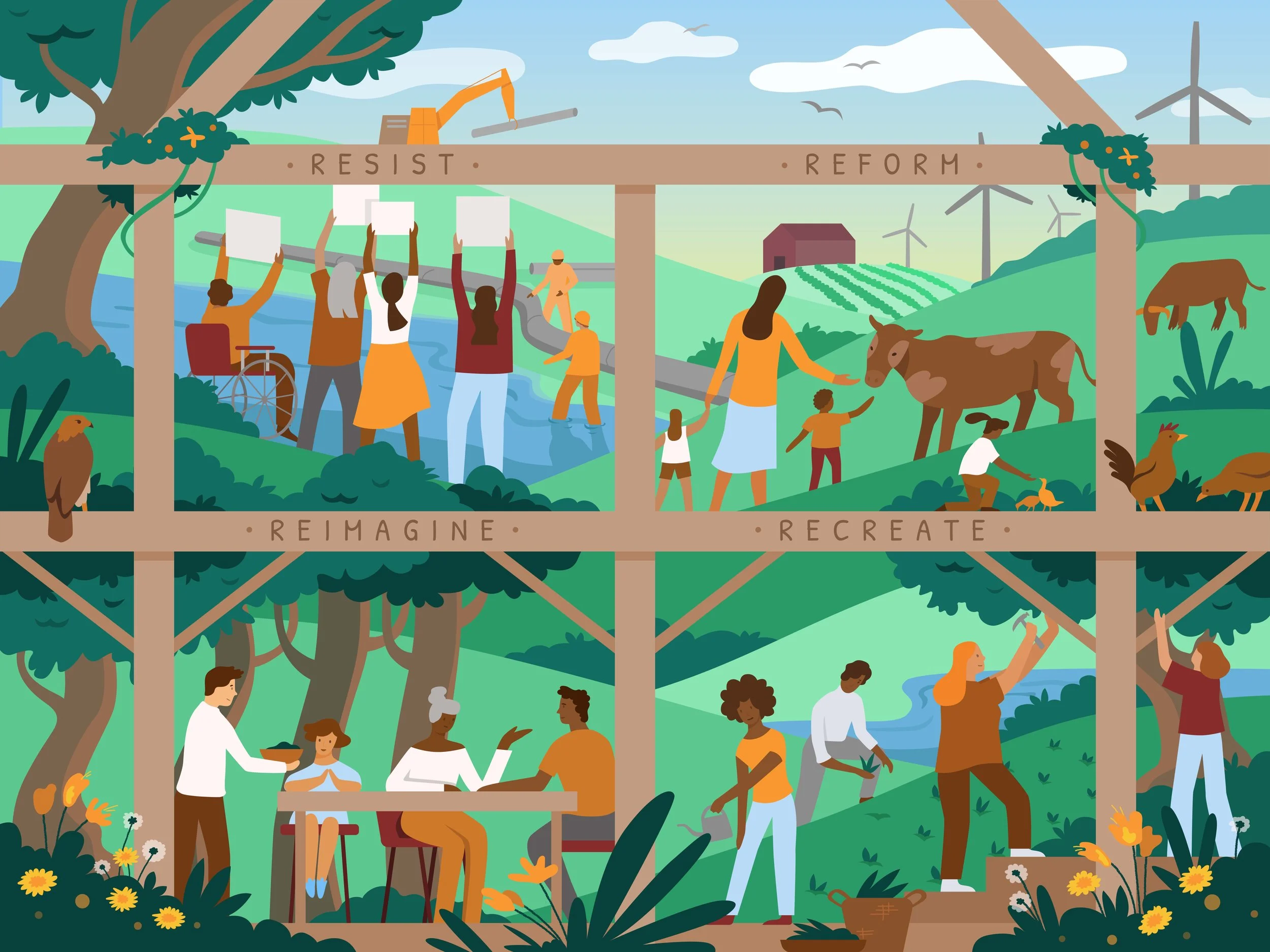
While individuals and organizations concerned about climate change often focus most on one of these Rs, a deep and practical commitment to each R—and linking between them—is critical to the success of our climate justice movement.
-
Working within the current system
The current structures in society have real impact on our daily lives and our ability to self-determine. While we work on building new structures, we must simultaneously change the structures of society that are in place now. We understand the urgent needs of people who lack healthy food, quality housing, well-paid work, safety & opportunity. This strategy tackles immediate needs and requires current social & political institutions to put resources toward addressing social problems. Examples include: policy development, electoral work and human services
-
Working against the current system
As Frederick Douglass famously said, “power concedes nothing without demand.” Throughout history, resistance struggles have given rise to our greatest wins. To address the root causes of injustice, we are often called upon to stand against the destruction of what we hold dear. This strategy analyzes & challenges our current political & social institutions by directly confronting how they perpetuate inequity. Examples include: non-violent civil disobedience, direct action, and community organizing.
-
Envisioning a just new system
We are in a critical period of social evolution that requires new ways of being. In order to generate a just world, we must be able to imagine and communicate what a society looks like that is based on partnership, inclusion & interdependence. This strategy engages how we think about ourselves in relation to each other & the whole, & taps our individual & collective ability to engender new cultural norms. Examples include: the arts, creative processes, media, academia, cultural & spiritual traditions.
-
Creating models for a just new system
The future we envision calls for the creation of new ways of doing things to take the place of the broken structures that have not been serving us. This strategy enables us to experiment with new ways of constituting our society by building just institutions, forms of governance & leadership models. Examples include: democratic schools, restorative justice processes, and local economies based on cooperatives.
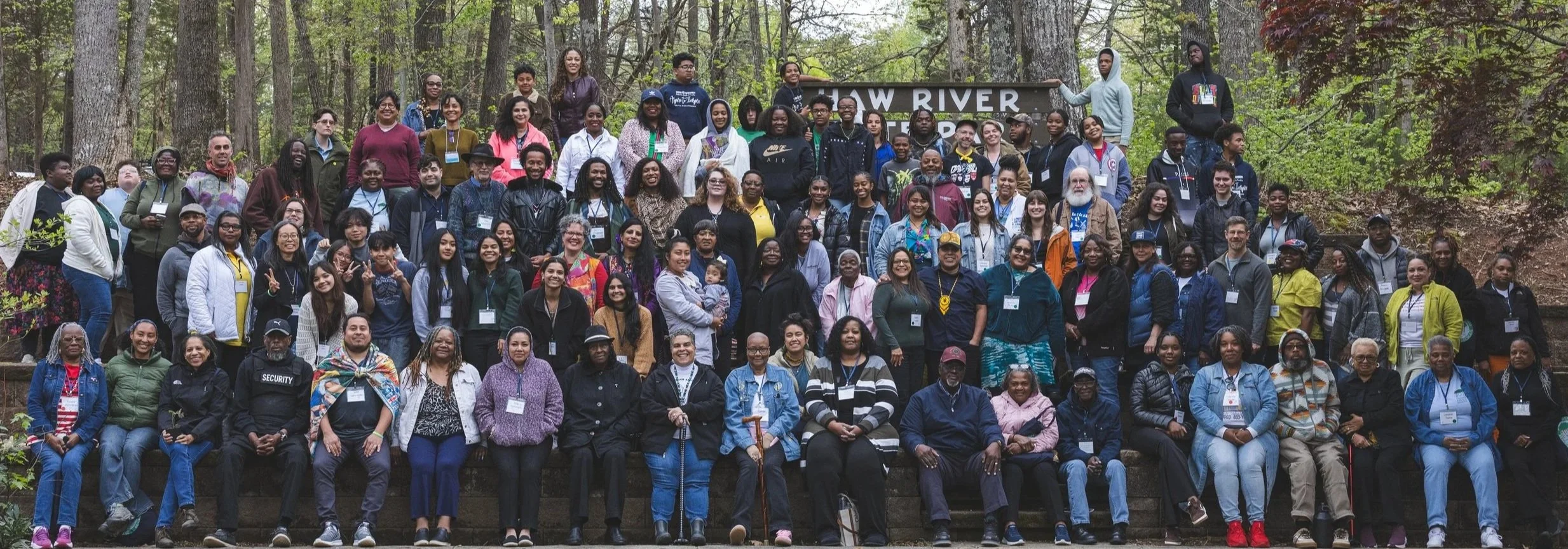
Examples of past workshops, learning, conversations, and art builds that demonstrate the four R’s of transformation:
Voices from the Frontlines Story Circles
Launching Your Community Resilience Hub
Indigenous Approaches to the Climate Crisis: Interactive Dialogue
Direct Action Training
From Eco- Phobia to Biophilia: People of Color & the Natural World
Working Well Across Generations: Adult Allyship Workshop
Zumba for Liberation
Building Community Wealth and Power Through Cooperatives
Transformation as Resilience Practices
Ageism and Youth Empowerment in Intergenerational Organizing
Herbalism for Healing and Wellness
Racial Equity Caucuses
Spoken Word and Puppetry Art Build
Images of Resistance: Documentary Film & Visual Art as Tools
Participatory Action Research for Energy Justice Campaigns
Resources
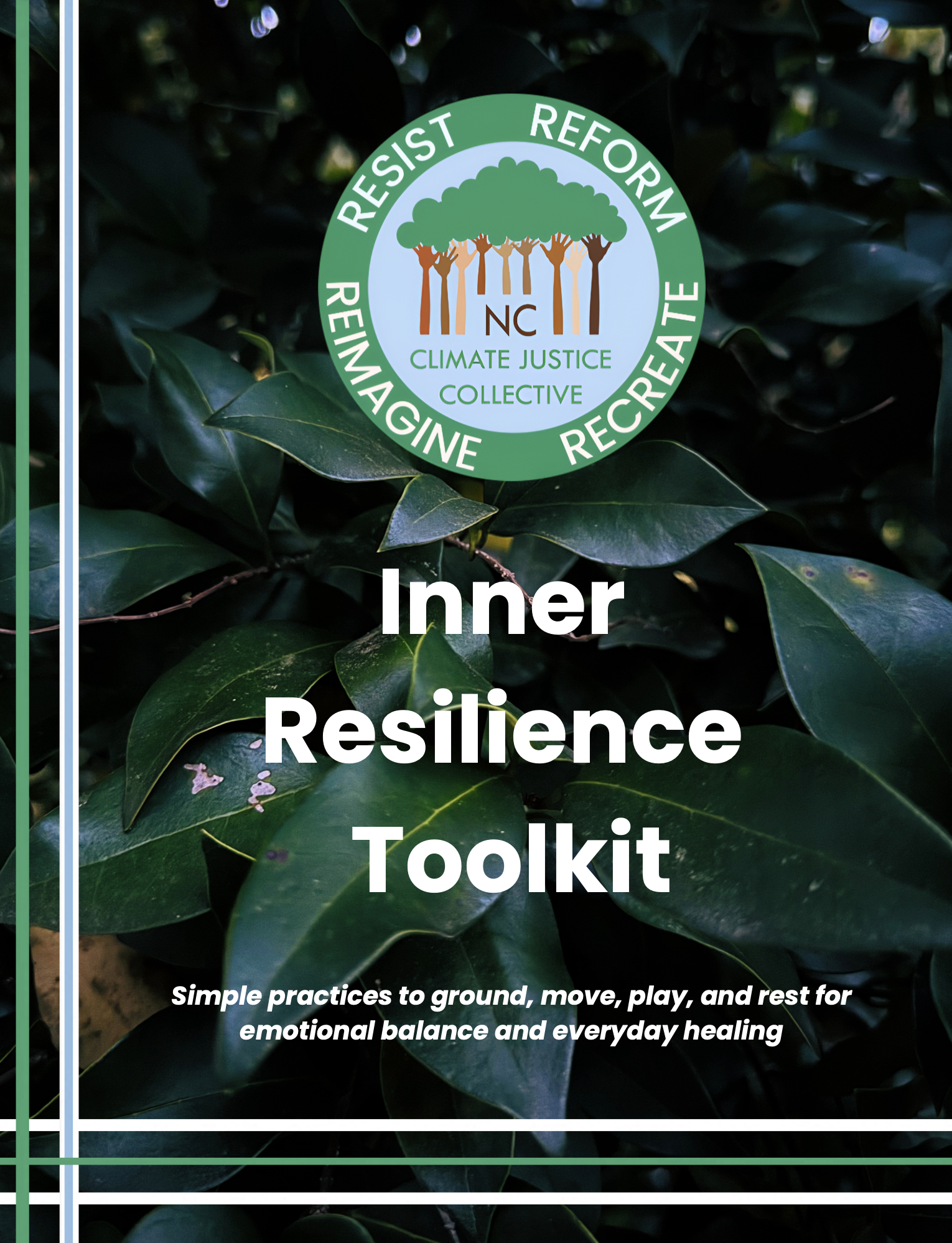
Inner Resilience Toolkit
*
Inner Resilience Toolkit *
This toolkit was created by the NC Climate Justice Collective’s 2025 Artists in residence for communities to engage with and add new practices to their self care and maintenance.
Movement Generation’s Just Transition Zine
A training tool that offers a framework for a fair shift to an economy that is ecologically sustainable, equitable and just for all its members. It is full of visuals, stand-alone sections, and curriculum ideas.
Bali Principles of Climate Justice & Jemez Principles for Democratic Organizing
The Bali Principles were developed by the coalition at the final preparatory negotiations for the Earth Summit in Bali in June 2002. The Jemez meeting was hosted in 1996 by the Southwest Network for Environmental and Economic Justice.