Lessons from Hurricane Helene: Re-Imagine Earth as our “Climate Haven”
When Hurricane Helene hit Western NC on September 27, 2024, I got a barrage of frantic calls from my family and friends there. Then power and cell towers went down and we lost communication for several terrifying days. When we were finally able to talk again, I learned about the utter devastation in my hometowns of Asheville and Swannanoa. Even though I’d assisted in hurricane disaster response before, this was unfathomable and heartbreaking. Over 30 inches of rain fell in parts of Western North Carolina that had already been saturated, quickly making Hurricane Helene the worst disaster in Southern Appalachian history both in the scope and scale of the damage. Over 200 people lost their lives, and over 70,000 homes were destroyed.
To help us grapple with this tragedy, we put out a call to our NCCJC 2025 TapRoot Arts Residents to share their reflections on the one year anniversary.
Tiffany Womack – 2025 TapRoot Arts Resident – was displaced for more than 3 weeks after a tree fell on her house in Weaverville.
“I was in my home office watching the fire from a downed power line in our neighbors yard when the power went out. It was 8 o'clock. And then I heard a tree crack… As my husband, Chris, leapt into the hallway, the ceiling came crashing down behind him… We grabbed what important documents we could, put our dog in the carrier and tried to evacuate, but we couldn’t even get out of our neighborhood.” recalled Tiffany in a short video reflecting on the storm’s 1-year anniversary.
While often described as such, we know extreme storms like Helene are NOT natural disasters: they are the logical outcome of a society that believes some people and some places are expendable. They are the product of a broken political and economic system dependent on constant industrial growth, that has given rise to climate chaos and unspeakable suffering.
Historically insulated from severe climate impacts, western NC communities like Asheville had often been referred to as “climate havens,” absorbing thousands of people fleeing wildfires and hurricanes in other parts of the country. At NCCJC, we have long known that nowhere is completely safe from climate change. We have also come to recognize that true “climate havens” are not places free from climate disruption, but rather are places where people are rising to the moment to create social safety nets and lasting well-being for all.
By this standard, communities across western NC lived up to their “climate haven” moniker. In the wake of Helene’s shocking devastation, people turned toward and took care of each other across lines of difference – defying political narratives that aim to divide and disempower us. In particular, we want to uplift and celebrate the work of our West Asheville-based Resiliency Organizing Hub anchor, Hood Huggers International, who creatively and quickly mobilized resources to support impacted residents. They offered a solar powered cell phone charging station, provided water, and coordinated deliveries and work brigades for isolated neighborhoods.
Another 2025 TapRoot Arts Resident, Andre Sansbury of Fayetteville, echoed these sentiments in a spoken word poem sharing:
“...We know these storms are not accidents. They are signatures of a system that treats whole communities like disposable maps… We rise with hammers and hope. Eastern families, mountain kin, voices braided in the rebuild. We demand solar ceilings, equity in every brick, justice in every nail. We are not waiting for rescue. We are the recovery. We are the next calm that will not be quiet. See these storms reveal truths; truths we’ve been trying to tell for years.These storms just don’t happen in the sky; they start in boardrooms and backroom deals. Let’s take care of the families that need us the most.”
Forging a Just Recovery for ALL of NC
We are not new to community-based disaster response at NCCJC, nor to the struggle of countering “disaster capitalism” in service of a truly Just Recovery. In the months following Helene, NCCJC worked closely with our Western NC partners to share resources and learnings from past recovery efforts both in Eastern NC and across the country. We organized a webinar with our Advisory Council member, Jayeesha Dutta from Another Gulf is Possible, to teach us about the Just Recovery framework she developed in the aftermath of Hurricane Harvey (watch here: Forging a Just Recovery for Western NC; passcode: YdSr77^Q).
Shortly after, NCCJC’s WNC organizer with Semilla de Vida launched the Just Recovery and Healing Group, which works to ensure that historically marginalized communities and grassroots groups are fully included in the regional planning and rebuilding effort. They envision a participatory budgeting process to fund rental assistance, mortgage relief, heating assistance, small business assistance, rapid response for immigrant communities under attack, and mental health services. They are exploring opportunities to create more climate equity and resiliency by prioritizing solutions like rooftop solar with battery storage and an urban garden network.
Reflecting on lessons from Helene, climate justice demands that we re-imagine the entire earth as a climate haven. None of us exists as an individualistic island, somehow shielded from the consequences of humanity’s shortsightedness. There is only one island, our shared home, the Earth. Like the seas and the rain, we rise and fall together. We must keep organizing to put strong social systems in place and ensure everyone has the support, care, and resources they need. Just Recovery is a doorway to Just Transition when we acknowledge the systemic transformation required.
That means not allowing the severity of Helene’s impacts to justify leaving behind the Eastern NC families still suffering from Hurricanes Matthew and Florence. The ReBuild program must deliver on its promise to finish building new homes for the 1,100 eastern NC families who have been waiting seven years or more.
Further, we know the danger from climate disasters now is much worse due to the administration’s dismantling of federal environmental, climate, and disaster response programs including: the defunding of FEMA, attacks on the National Weather Service, and recent suspension of the National Flood Insurance Program. Our government disaster response agencies must be fully staffed and well funded to keep our people safe in the face of climate chaos.
More than ever, inner resilience practices are crucial to help us to weather these terribly tough times. We hope you can take a few minutes to experience this guided meditation, Ambient Affirmations, from ceremonial leader, singer songwriter and healing justice practitioner Anna Jeffries, a 2025 TapRoot Arts Resident from the Occaneechi Band of the Saponi nation. And save the dates (more information below) for our upcoming Roadshow, Art of Us: Cultivating and Celebrating Inner Resilience, which combines interactive performances, community learning, and a fully revised toolkit of inner resilience practices.
Spoken word poet Hope Ostane-Baucom, a 2025 TapRoot Arts Resident from Mooresville, offers this vision for how we embody a Just Recovery in her poem, She Did Not Arrive Alone:
Justice is the levee we build together,
Resilience the harvest we share with intention,
Equity the shelter we demand.
Helene tore the sky open and bled raw earth.
Now we rise through the breach,
Designing a recovery
As powerful and enduring as the people
Who refused to be washed away.
With gratitude,
The NCCJC Team
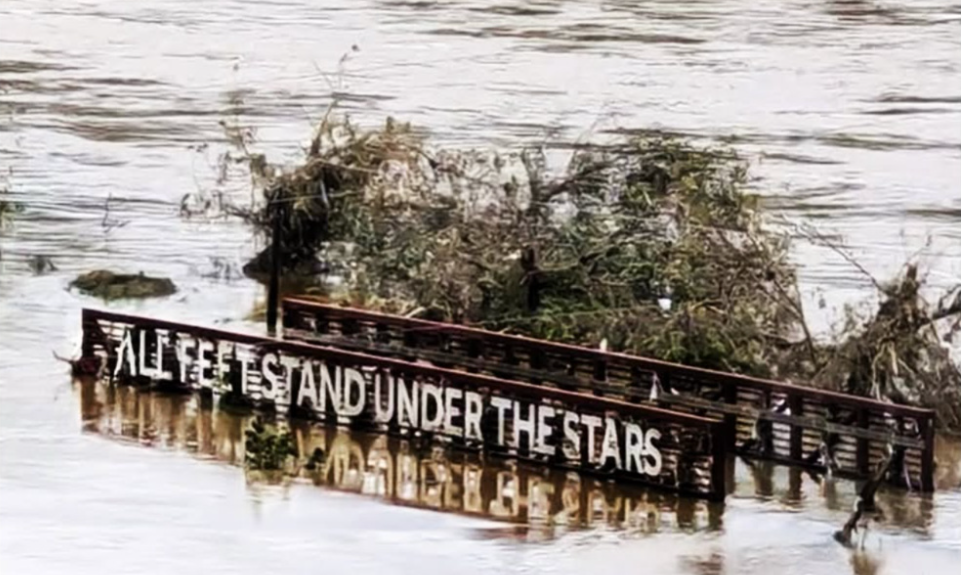
This photo of the Wilma Dykeman Greenway bridge (featuring a line of poetry from Hood Huggers International Co-Founder, DeWayne Barton) helps visualize the flooding impacts of Hurricane Helene. It was displayed at the Art of Recovery exhibit, which offered a space for community members to explore the vision for a just and resilient recovery.
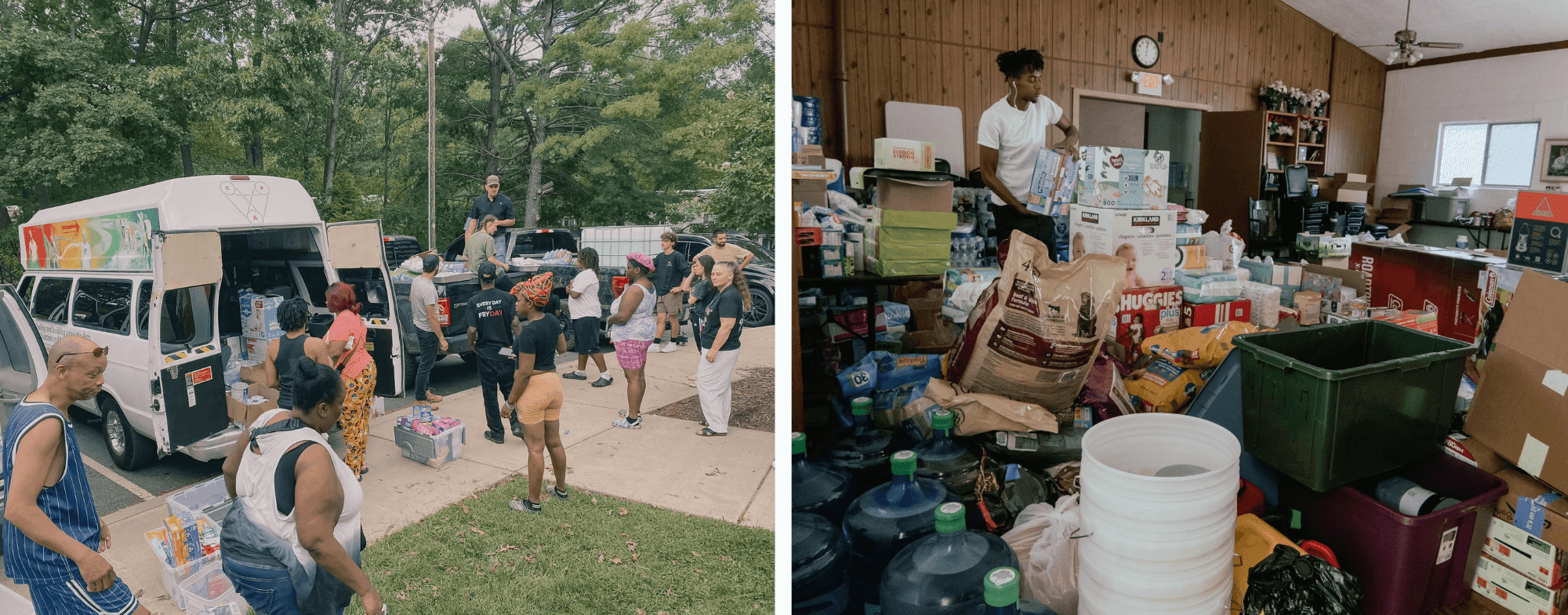
Volunteers with Hood Huggers International (HHI) organize and distribute supplies for community members in the aftermath of Helene. HHI Founder and CEO, DeWayne Barton, reflected, “The community really stepped up. People came out with their chainsaws. It was such a chaotic time of trying to see who needs help and getting people the food and water they need. It’s a good thing that it helped draw people together, but it’s also a sad thing that so many lives and homes and businesses were lost…”
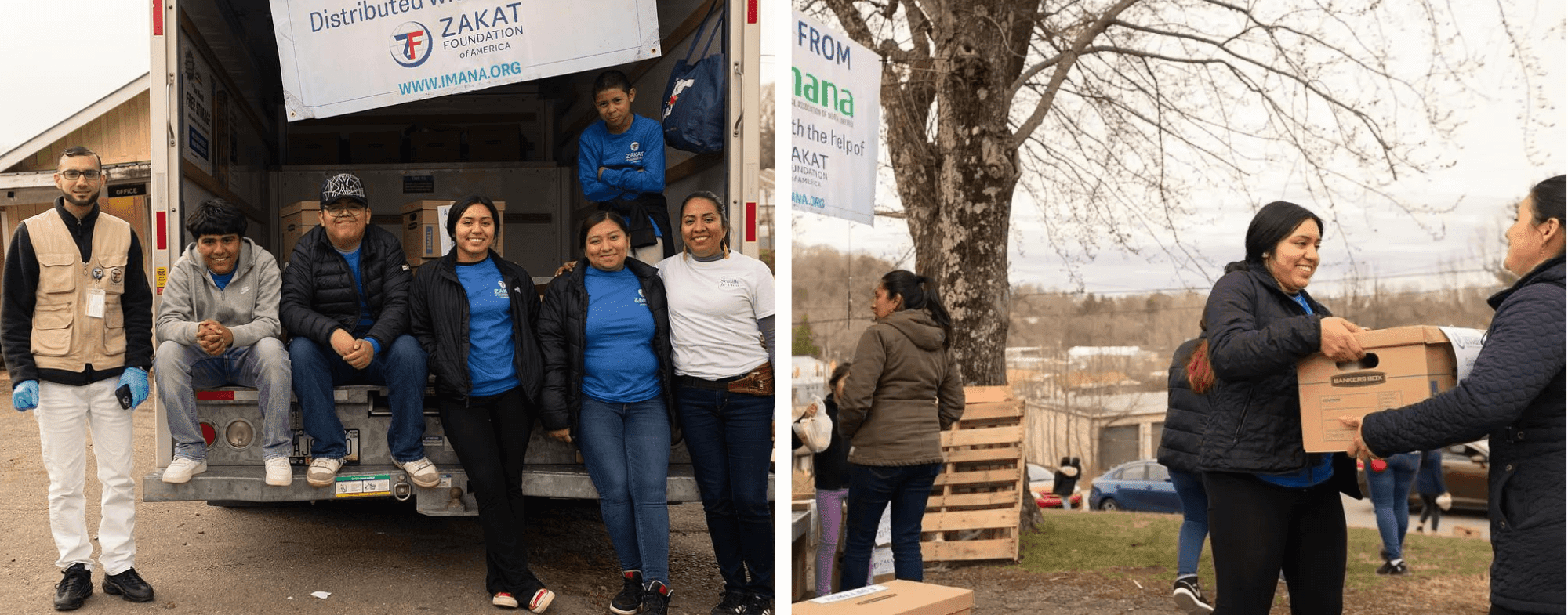
Volunteers with Semilla de Vida distributed boxes of food and supplies to communities impacted by Helene. Much of their outreach focused on reaching immigrant communities who were unable to access disaster assistance and recovery resources.